
I-751 Evidence: What to Submit to Remove Conditions (2026 List)
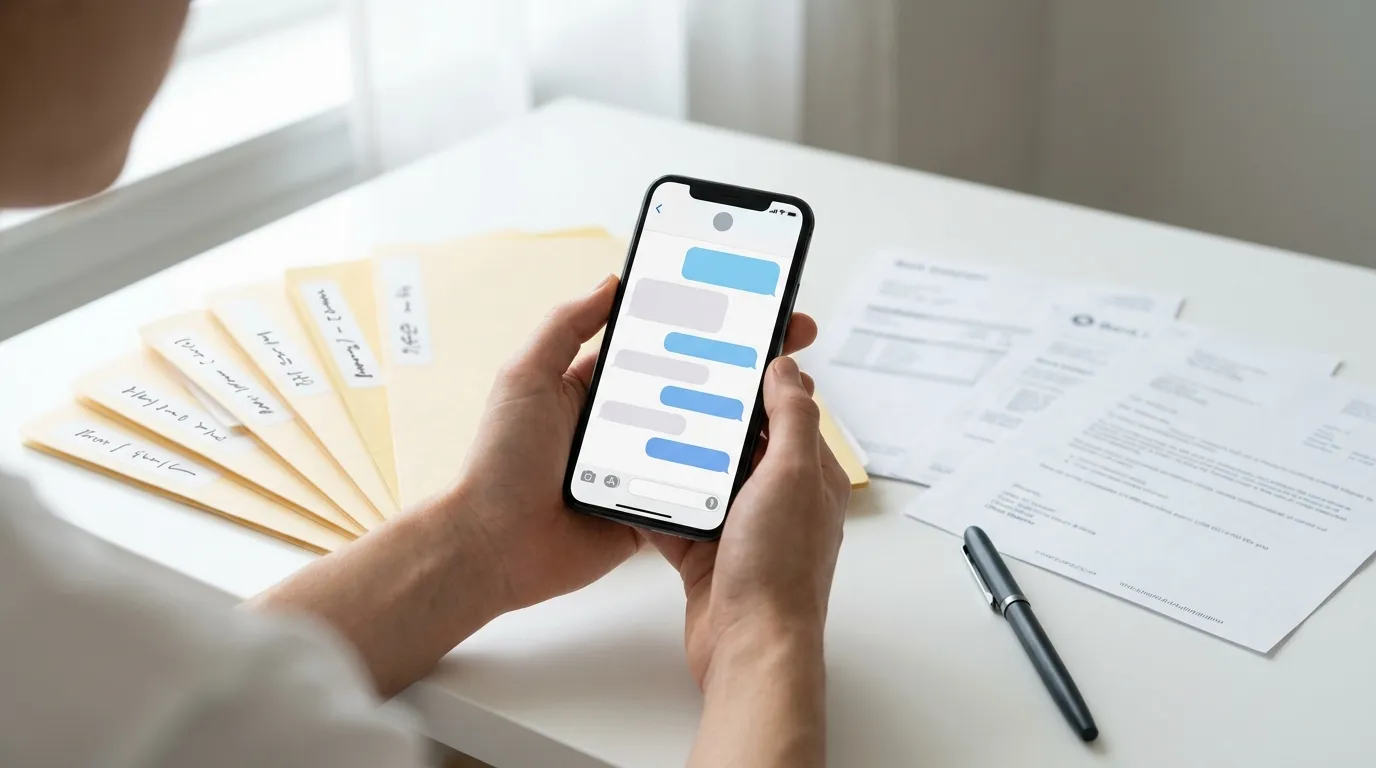
The job of an I-751 is narrow: show that your marriage was real when it started and is still real now. You are asking USCIS to remove the conditions on a conditional green card, and you do that with evidence that a genuine marital union exists.
The Form I-751 instructions (edition 04/01/24) frame the standard as continuity. They ask for documents that demonstrate the circumstances of your relationship "from the date of the marriage to the present date." Hold on to that phrase — it shapes every decision about what to gather. A snapshot of one good month is not the assignment. A record that spans the whole marriage is.
This guide walks through the official evidence list, the affidavits USCIS asks for by name, where communication records fit, how to organize the packet, and what to do with non-English documents. It sticks to what the instructions actually say and flags when a recommendation comes from a filing-prep service or attorneys rather than from USCIS itself.
The official evidence list
The Form I-751 instructions (edition 04/01/24) describe the kinds of relationship evidence USCIS wants to see. The core categories are:
- Birth certificates of children born to the marriage.
- A joint lease or mortgage, showing you share a home.
- Joint financial records: shared bank accounts, combined bills, joint tax filings, and similar proof that your finances are intertwined.
- Affidavits sworn to by at least two people who know your marriage (its own section below).
- A catch-all: other documents that you consider relevant to establish that the marriage is genuine and continuing.
That catch-all matters more than people expect. USCIS does not try to name every possible document, because no couple's life fits a fixed list. The instructions ask for copies of "as many documents as you can" to demonstrate the circumstances of the relationship across the whole marriage. The signal you are sending is breadth and consistency: several kinds of evidence, spread over time, all pointing to the same real relationship.
Think of the evidence in two tiers:
- Primary evidence most directly proves a shared life: a joint bank account with regular activity from both spouses, a lease or mortgage naming you both, jointly filed tax returns, and insurance policies where each of you is listed on the other's coverage. These documents are hard to fake and easy to verify, which is why they carry the most weight.
- Supporting evidence fills in around them: utility bills at a shared address, joint memberships, travel itineraries booked together, photos across the years, correspondence addressed to both of you, and communication records. No single item proves much on its own, but a consistent spread of them, layered over the primary documents, reads as a genuine, continuing marriage rather than a paper arrangement assembled for the filing.
Lead with the strongest primary evidence, then use the catch-all to round out the picture. And note the instructions ask for copies, not originals: make clean, legible copies of everything and keep your originals. Range and clarity beat sheer volume.
The affidavit
Affidavits are the one supporting item the I-751 instructions name explicitly. The Form I-751 instructions (edition 04/01/24) call for affidavits sworn to by at least two people who have personal knowledge of your marriage. "At least two" is a floor, not a ceiling — and affidavits are not a substitute for documentary evidence like joint finances and a shared lease.
An affidavit is simply a sworn written statement. The people who write yours should actually know you as a couple: a parent, a longtime friend, a neighbor, a coworker, a landlord, or a member of your religious community. What makes an affidavit useful is not letterhead or length — it is specificity. A strong affidavit covers:
- How the person knows you both, and for how long.
- Specific things they have observed over time: visits to your home, holidays and gatherings you have attended together, how you handle everyday life as a couple.
The instructions do not impose an elaborate template, so don't invent formal requirements that are not there. A handful of detailed, personal statements will do far more than a stack of short, interchangeable letters that all say the same generic thing. Pick your affiants for what they have actually seen.
A common mistake is treating affidavits as the centerpiece of the packet. USCIS weighs statements from people who care about you differently from independent documents like bank records, and a case that leans mostly on letters can look thin.
Use affidavits as corroboration instead: they put a human voice on the marriage that the paperwork alone cannot. When each one adds a distinct vantage point — a parent who has watched the relationship since it began, a neighbor who sees you day to day, a coworker who knows the practical rhythms of your life — the set reads as genuine rather than coached. Have each person write in their own words, and make sure every statement is dated and signed.
Communication records as supporting evidence
Text messages, call logs, and chat history are not on the official I-751 list. USCIS does not ask for them by name. They fit under the catch-all, as "other documents that you consider relevant" — supporting evidence that reinforces the primary documents, not a replacement for them.
The filing-prep service CitizenPath recommends "phone and text message records showing that you and your spouse communicate on a regular basis" as evidence of an intimate, ongoing relationship. That framing is worth taking seriously, with the caveat that it comes from CitizenPath, not USCIS.
Communication records are most persuasive when a couple has genuinely spent time apart: work travel, a military deployment, a stretch of long-distance living. A steady stream of messages across the gap helps explain how the marriage stayed intact when you were not under the same roof.
The universal advice from immigration attorneys: sample, don't dump. A complete phone export can run well past 300 pages, and nobody at USCIS is going to read all of it. A tidy sample showing consistent communication over time, with names or numbers and dates visible on each message, makes the point far better than a massive undifferentiated printout.
A few practical rules make a communication sample land the way you want:
- Show both sides of the exchange. A one-sided stream of messages proves little. The back-and-forth is what reads as a real relationship.
- Keep the sender and date on every message, not just at the top of a page. The record's value is that it is anchored in time, which ties directly to the "from the date of the marriage to the present date" standard.
- Spread the sample across the marriage. A few pages from several points in time say more than a hundred pages from one stretch, because continuity is exactly what you are trying to prove.
- Do not curate out context. A thread that has obviously been clipped to the flattering parts invites skepticism. Include enough of the surrounding exchange that nothing looks cherry-picked.
Boundless, another filing-prep service, rates phone and chat records as medium-strength evidence, below joint finances and property. That is the right mental model: communication records can be decisive when they explain a period apart, but they support the case rather than carry it.
This is where TextPort is useful. TextPort pulls the conversation straight out of iMessage, right on your iPhone, and turns it into a clean, timestamped, text-searchable PDF where every message carries its sender and date/time. It also handles WhatsApp and other chat apps — which matters when the conversation lives somewhere other than plain SMS. For app-specific steps, see the guide on how to print WhatsApp chat history for USCIS.
Organizing the packet
A readable packet is easier to trust. CitizenPath recommends a sensible structure:
- Group by category. Keep joint financial records together, lease and housing documents together, affidavits together, and communication records together, each behind a clear label.
- Go chronological within each category, so the timeline is easy to trace from the date of the marriage forward.
- Label everything, so nothing requires guesswork.
The format rules depend on how you file, and USCIS is specific about both paths.
If you file on paper, everything goes single-sided on standard 8.5 x 11 inch pages. Do not send binders, photo albums, scrapbooks, or digital media; USCIS returns those unprocessed. Copies have to be legible, not blurry, faded, skewed, or cut off, and black-and-white scans are acceptable. The details are in the USCIS tips for filing forms by mail.
If you file online through myUSCIS, each file has a 12MB maximum and has to be a PDF, JPG, or JPEG. Do not encrypt or password protect your files. One easy trap to avoid: iPhone screenshots save as PNG or HEIC, and neither format is on the accepted online list, so convert them to PDF or JPG before you upload. The full list of rules is in the USCIS tips for filing forms online.
Non-English documents
If any document you submit is in a language other than English, it needs a certified English translation. This is not optional: under 8 CFR 103.2(b)(3), every foreign-language document must be accompanied by a full English translation that the translator certifies as complete and accurate, plus a certification that the translator is competent to translate.
USCIS form instructions add that the certification should carry the translator's signature, printed name, date, and contact information. The rule calls for a certification; it does not mention notarization. For the exact wording, who can translate, and how to format the certification, see the USCIS translation requirements guide.
The bigger picture
Marriage-based filings are getting more scrutiny, not less. In policy alert PA-2025-23 (October 17, 2025), USCIS updated its manual so that a marriage's bona fides are now reviewed both when the underlying petition is adjudicated and again when adjustment of status is adjudicated — a change USCIS describes as enhancing fraud screening. More moments where the same relationship is examined make a consistent, well-documented record more valuable, not less.
The practical takeaway: the habits you build for one filing carry across the others. The evidence that supports an I-751 — joint finances, a shared home, affidavits, a record of continuous communication — is largely the same evidence that supports a bona fide marriage at earlier stages. A couple that keeps a running, organized record as they go, rather than scrambling to reconstruct one at the last minute, is in a far stronger position whenever the marriage comes up. For the broader view of what that record looks like across filings, see the bona fide marriage evidence guide.
The bottom line
The I-751 asks one thing of you: prove your marriage was real and has stayed real, from the date of the marriage to the present date. To do that well:
- Lead with primary evidence. Joint finances, a shared lease or mortgage, and children's birth certificates carry the most weight.
- Add affidavits from at least two people who know your marriage and can describe specific things they have observed over time.
- Support it with catch-all items, including communication records that show consistent contact, sampled and dated, especially across any time you spent apart.
- Organize and format it by category, chronologically, and to the paper or online rules USCIS publishes.
One thing to be clear about: TextPort is not a law firm or an immigration service. Nothing in this article is legal advice, and no evidence packet is guaranteed to lead to approval; that is always USCIS's call. Immigration rules and form editions change, so check the current Form I-751 instructions on the USCIS website, or talk to an immigration attorney, before you file. This guidance is current as of mid-2026 and cites the I-751 instructions edition 04/01/24.
Frequently asked questions
-
The Form I-751 instructions (edition 04/01/24) point to documents that show a genuine, ongoing marriage: birth certificates of children born to the marriage, a joint lease or mortgage, joint financial records, and affidavits from at least two people who know you as a couple. There is also a catch-all for "other documents that you consider relevant." The instructions ask for copies of as many documents as you can gather to demonstrate the circumstances of the relationship from the date of the marriage to the present date, so range over the whole marriage matters as much as any single item.
-
An I-751 affidavit is a sworn written statement from someone who knows your marriage firsthand: a friend, relative, neighbor, coworker, or clergy member. The Form I-751 instructions (edition 04/01/24) call for affidavits sworn to by people who have personal knowledge of the marriage. A useful affidavit explains how the person knows you both, how long they have known you, and specific things they have observed over time, such as visits to your home, holidays together, or how you handle life as a couple. Pick people who can speak to concrete details, not just vouch in general terms.
-
The Form I-751 instructions (edition 04/01/24) call for affidavits sworn to by at least two people who know your marriage. Two is a floor, not a target, and the affidavits work best alongside documentary evidence like joint finances and a shared lease rather than in place of it. Choose people whose statements will actually add something: a parent, a longtime friend, a landlord, or a coworker who has seen your life as a couple up close over time. Quality and specificity carry more weight than piling up a stack of short, generic letters.
-
Yes, as supporting evidence. USCIS does not name text messages or chat logs on the I-751 relationship-evidence list, but the instructions include a catch-all for "other documents that you consider relevant," and that is where communication records fit. The filing-prep service CitizenPath recommends phone and text message records showing you and your spouse communicate on a regular basis as evidence of an intimate, ongoing relationship. They matter most when a couple has spent stretches apart, such as work travel or a long-distance period, and they support the primary evidence rather than replace it.
-
There is no magic number. The Form I-751 instructions (edition 04/01/24) ask for copies of as many documents as you can to demonstrate the circumstances of the relationship from the date of the marriage to the present date. In practice that means leading with the strongest primary evidence (joint finances, a shared lease or mortgage, children's birth certificates), backing it with affidavits from at least two people, and filling gaps with relevant catch-all items. Aim for a record that covers the whole marriage and reads as consistent over time, not a single thick pile from one month.
-
It is not automatically a problem — not every couple splits every account down the middle. The Form I-751 catch-all covers "other documents that you consider relevant," so show a shared life through whatever fits your situation: one spouse named on a lease while the other appears on utility or insurance records, joint travel, photos over time, and affidavits from people who know you. The goal is a consistent picture of a real, continuing marriage across the whole period, not perfectly symmetrical accounts. Explain the arrangement plainly rather than leaving gaps unaddressed.
-
Yes. The Form I-751 instructions (edition 04/01/24) ask you to demonstrate the circumstances of the relationship "from the date of the marriage to the present date." That continuity is the point of the filing: you are showing the marriage was real and has continued, not that it looked real on one day. A record weighted entirely toward a single period can raise questions about the stretches it skips. Spread your evidence across the years so the timeline reads as unbroken, and make sure documents and affidavits carry visible dates.
-
Yes. Under 8 CFR 103.2(b)(3), any foreign-language document submitted to USCIS must come with a full English translation that the translator certifies as complete and accurate, along with a certification that the translator is competent to translate. USCIS form instructions add that the certification should include the translator's signature, printed name, date, and contact information. The rule requires a certification; it does not mention notarization. For the exact wording and a walkthrough, see the USCIS translation requirements guide.

Start exporting your messages
Available for iPhone, Mac, and Windows. No computer required.