
Bona Fide Marriage Evidence: What USCIS Actually Lists (2026)
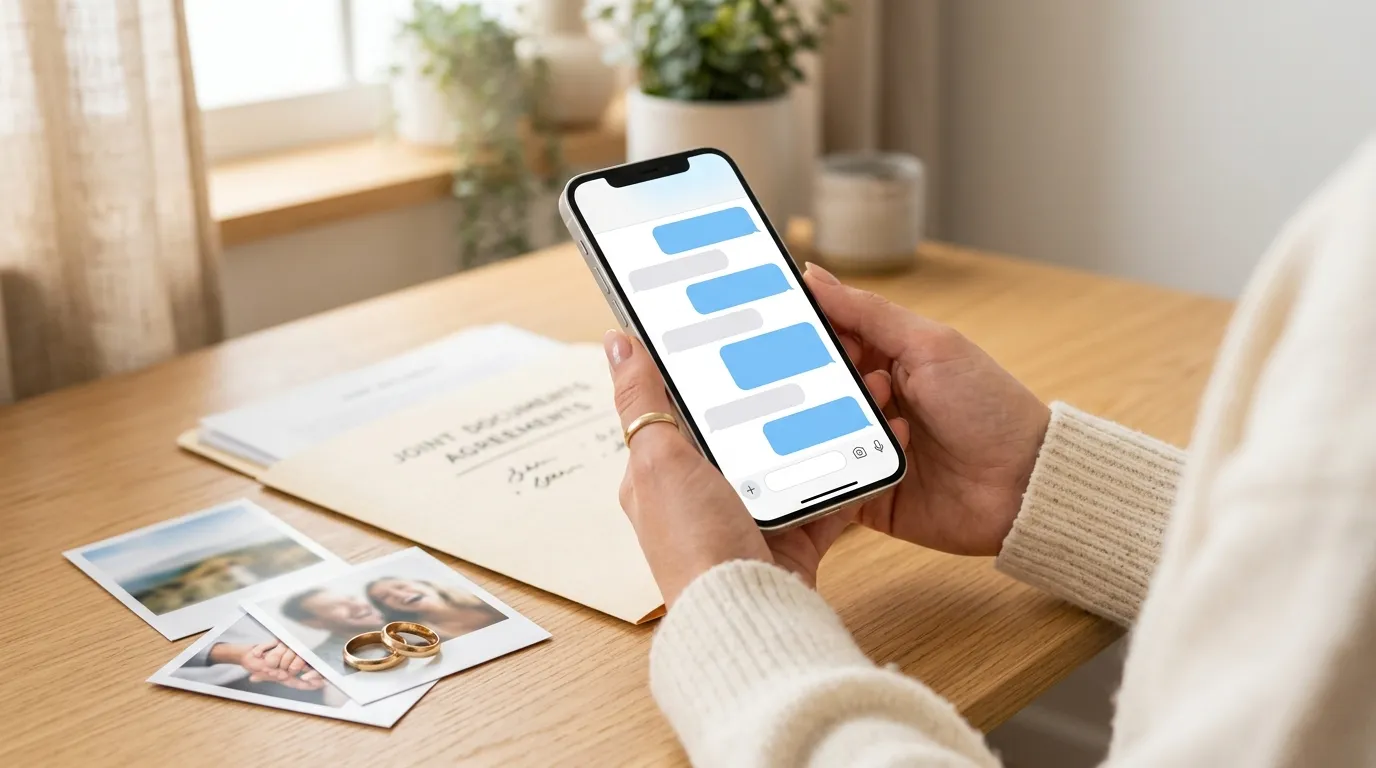
"Bona fide" is the phrase every marriage-based green card case turns on. It means your marriage is real — entered into to build a life together, not to obtain an immigration benefit. When USCIS reviews an I-130 petition or adjustment of status application, the officer is asking one question: is this marriage genuine? Bona fide marriage evidence answers that question with documents instead of assertions.
One change to know up front. In a policy alert dated October 17, 2025 (PA-2025-23), USCIS stated that it now reviews a marriage's bona fides both when the petition is adjudicated and again when adjustment of status is adjudicated, described as a measure to enhance fraud screening. As of mid-2026, the same relationship can be examined at two separate stages — so the goal is to assemble a durable evidence package once and keep it current.
This guide draws a hard line between what USCIS officially lists and what attorneys and filing services recommend on top. Blurring the two is how people end up thinking a folder of wedding photos is the core of a strong case.
What USCIS officially lists
The primary source for marriage evidence is the Form I-130 instructions (edition 04/01/24) and the USCIS Policy Manual, Volume 6, Part B, Chapter 6. When USCIS spells out what to submit to prove a bona fide marriage, it names six categories:
- Documentation showing joint ownership of property. A deed with both spouses' names is the clearest example.
- A lease showing joint tenancy of a common residence. Evidence you actually live together, in both names.
- Documentation showing that you and your spouse have combined your financial resources. Joint bank accounts, joint credit accounts, and shared financial obligations.
- Birth certificates of children born to the marriage. Direct evidence of a shared life, where it applies.
- Affidavits sworn to (or affirmed) by third parties who have personal knowledge of the bona fides of the marital relationship. The instructions specify what each affidavit must contain, covered in its own section below.
- Any other relevant documentation to establish that there is an ongoing marital union.
Notice what is missing. The famous evidence types — wedding photos, vacation photos, text message threads, call logs, joint trips, matching addresses on mail — are not named in categories one through five. They all live in category six, the catch-all.
The Policy Manual frames the list as "including but not limited to," so the catch-all is genuine: USCIS really will consider other relevant documentation. But the documents USCIS chose to name are financial and legal — evidence of intertwined lives that is hard to fake. Photos and chats support that picture. They are not, on the official reading, the picture itself.
What attorneys and filing services recommend on top
Attorneys and filing-prep services routinely recommend a broader set of documents, all of which enter through the catch-all category. Treat everything in this section as commonly recommended practice, not a USCIS requirement.
- Photos over time. Not just the wedding, but images across the relationship, ideally showing different settings, seasons, and people. The point is continuity, that the marriage has a history.
- Communication records. Text messages, chat logs, and call records showing that you and your spouse stay in regular contact. More on these below, because format matters.
- Evidence of traveling together. Itineraries, boarding passes, and photos from trips that place both spouses in the same place at the same time.
- Insurance and beneficiary designations. Naming a spouse on health insurance, life insurance, or a retirement account is frequently suggested as evidence of intertwined lives.
Why do practitioners recommend so much that USCIS never names? Because officers are exercising judgment about a human relationship, not ticking boxes. The named categories establish that two lives are legally and financially intertwined; the recommended extras establish that the relationship has texture — a history, ongoing contact, shared experiences, and people who can vouch for it. The extras fill gaps the hard documents leave open.
How much weight does each type carry? There is no official USCIS ranking, so any tier list is practitioner opinion. Boundless rates joint finances and jointly owned or leased property as the strongest evidence, and rates communication records such as phone and chat logs as medium-strength, below the financial documents. That roughly tracks the I-130 list itself, where the named categories are documentary and financial.
The practical takeaway: lead with the hard documentary evidence USCIS actually lists, then layer photos, communication records, and affidavits on top. A case built mostly on screenshots and photos, with thin financial evidence, is a weaker case no matter how many pages it runs.
None of these extras is required, so do not treat their absence as fatal or their presence as sufficient. A couple with a joint deed, joint accounts, and children born to the marriage has strong evidence even with almost no photos; a couple with a thousand photos and no shared finances has a harder case to make. Match your evidence to your actual life, not to a listicle.
Communication records done right
If communication records are medium-strength and never required, when are they actually worth assembling? A few situations where they carry the most weight:
- You and your spouse have spent time apart. Long-distance periods, military deployment, or a spouse still living abroad all leave gaps in the "shared residence and joint accounts" story. Communication records help bridge them.
- The marriage is recent. A couple married a few months ago may not have joint property, a joint lease, or years of combined finances yet. A record of ongoing communication is one of the few things a new marriage can readily show.
- You have few joint accounts so far. When the financial paper trail is thin, communication and photos do more of the work.
The near-universal advice from immigration attorneys is to sample, not dump. A complete iPhone message export can run well past 300 pages, and nobody at USCIS is reading all of it. Worse, a giant undifferentiated dump can read as padding — the opposite of the impression you want.
The standard recommendation is a well-organized sample showing consistent communication over time, with both names or numbers and dates visible on each message. Pick exchanges spread across months rather than a single dense week, and favor moments that show a shared life in motion: planning a trip, discussing money, checking in during a period apart. CitizenPath, for example, suggests including phone and text message records that show you and your spouse communicate on a regular basis, grouped by category, in chronological order, with clear labels.
Format is where good evidence gets tripped up:
- Online filing (myUSCIS): each file must be a PDF, JPG, or JPEG under 12MB, and USCIS instructs you not to encrypt or password-protect your files (see the official tips for filing forms online). One detail catches many people: iPhone screenshots save as PNG or HEIC, neither of which is accepted, so convert them to PDF or JPG first.
- Paper filing: everything goes single-sided on standard 8.5 x 11 inch pages, copies must be legible, and USCIS returns binders, photo albums, scrapbooks, and digital media unprocessed (see the tips for filing forms by mail).
This is where a purpose-built export tool earns its place. TextPort pulls a conversation straight out of iMessage — right on your iPhone, no computer needed — and turns it into a timestamped, text-searchable PDF where every message carries its sender and date. It also handles WhatsApp and other chat apps, and the PDF output lands squarely inside the USCIS format rules. For the step-by-step, see our guide to printing chat history for USCIS.
The affidavit option
Affidavits from third parties are one of the six categories USCIS names, so they belong on the official list, not the "recommended extras" pile. But they only count for much if they meet the instructions. The I-130 instructions (edition 04/01/24) are specific: each affidavit sworn to by a person with personal knowledge of the bona fides of the marriage must contain the following about the affiant:
- Their full name and address.
- Their date and place of birth.
- Their relationship to you or your spouse, if any.
- Full information and complete details explaining how the person acquired knowledge of your marriage.
That last point separates a useful affidavit from a throwaway one. A letter that simply says "I know this couple and their marriage is real" adds little. An affidavit that explains how the affiant knows — they attended the wedding, share holidays with the couple, have visited the shared home — demonstrates genuine personal knowledge rather than a favor for a friend.
2025 scrutiny changes
In PA-2025-23, dated October 17, 2025, USCIS stated that marriage bona fides are now reviewed both when the underlying petition is adjudicated and when adjustment of status is adjudicated, and it described this as a step to enhance fraud screening. As of mid-2026, that is the stated policy.
In practice, a package that satisfies the petition stage may be revisited later. The sensible response is not to panic-collect a mountain of paper. Assemble a solid, organized evidence set once, keep the originals, and keep it current as your shared life produces more documents: another year of joint tax filings, a renewed lease, an added beneficiary. Evidence that is easy to refresh is easier to present a second time than a one-off pile you have to rebuild from scratch.
If you build part of your case on communication records, keep the source material — the original conversations and exports, not just the PDF you filed. If an officer at a later stage asks a follow-up question or issues a request for evidence, you can produce more from the same well rather than reconstructing a conversation from memory.
Related filings
Marriage-based evidence sits inside a longer timeline, and the same principles show up at each stage:
- Still engaged? The relationship-evidence rules for a fiancé petition are different. Our K-1 visa proof of relationship guide covers what applies before the marriage.
- Removing conditions. Two years after a conditional green card, you file to remove conditions. Our I-751 evidence guide walks through that stage, where you show the marriage from the wedding date to the present.
- Foreign-language documents. Our USCIS translation requirements guide covers the certification rule.
- Exporting a chat thread. For the general mechanics, see our WhatsApp export guide.
The bottom line
Proving a bona fide marriage comes down to knowing what USCIS actually lists versus what everyone else recommends. Keep the line clear:
- The official list is six categories, and they are mostly documentary and financial: joint property, a joint lease, combined finances, children's birth certificates, third-party affidavits, and a catch-all.
- Photos and text messages are not named. They enter only through the catch-all, which means they support a case built on harder evidence rather than carrying it.
- Lead with the strong stuff. Practitioner tiers (Boundless rates joint finances and property highest, communication records medium) roughly track the official list. Build on financial and legal documents, then layer everything else on top.
- Assemble once, keep it current. With the 2025 double-review policy, the same evidence may be examined at two stages, so a durable, organized package beats a last-minute scramble.
TextPort is not a law firm or an immigration service. Nothing in this article is legal advice, and no evidence package, from any tool, guarantees an approval. USCIS instructions, editions, and policy change over time, so before you file, confirm the current form instructions on uscis.gov or consult an immigration attorney about your specific case. This article is current as of mid-2026.
Frequently asked questions
-
The I-130 instructions (edition 04/01/24) name six categories: joint ownership of property; a lease showing joint tenancy of a shared residence; documentation of combined financial resources; birth certificates of children born to the marriage; affidavits from third parties with personal knowledge of the marriage; and a catch-all, "any other relevant documentation to establish that there is an ongoing marital union." The Policy Manual carries the same list, framed as "including but not limited to," so the categories are examples, not a closed checklist.
-
No. Photographs are not named anywhere in the six categories the I-130 instructions list. Wedding and travel photos are still useful and routinely submitted, but they enter only through category six, the catch-all for "any other relevant documentation." That is not a reason to skip them — it means photos are supporting material layered on top of the harder documentary evidence USCIS actually lists, like joint property and combined finances, rather than the centerpiece of a strong filing.
-
No. Text messages, chat logs, and call records are not named in the I-130 categories. Like photos, they qualify only under the catch-all for other relevant documentation. That said, immigration attorneys and filing-prep services widely recommend communication records, especially when spouses have spent time apart or the marriage is recent. USCIS accepts them under a general category and never requires them; practitioners commonly suggest including a well-organized sample.
-
In a policy alert dated October 17, 2025 (PA-2025-23), USCIS stated that a marriage's bona fides are now reviewed both when the I-130 petition is adjudicated and again when adjustment of status is adjudicated, described as a step to enhance fraud screening. As of mid-2026 that means the same relationship can be examined at two stages. Practically, assemble your evidence once and keep it current, because you may need to show it more than once.
-
There is no official USCIS ranking, so treat any tier list as practitioner opinion. Boundless rates joint finances and jointly owned or leased property as the strongest evidence, and communication records like phone and chat logs as medium-strength, below the financial documents. That roughly tracks the I-130 list, where the named categories are documentary and financial. A practical read: lead with joint accounts, a shared lease, and combined resources, then layer photos, communication records, and affidavits on top.
-
Curate a sample rather than dumping everything. Attorneys advise picking exchanges spread across time that show consistent, ongoing communication, with both names or numbers and dates visible. For online filing, each file must be a PDF or JPG under 12MB, so a paginated PDF works better than a pile of screenshots (iPhone screenshots are PNG or HEIC, which are not accepted formats). Our guide to printing chat history for USCIS walks through the whole workflow.
-
Yes, if they contain a foreign language. Under 8 CFR 103.2(b)(3), any foreign-language document must come with a full English translation, plus the translator's certification that the translation is complete and accurate and that they are competent to translate. The I-130 and I-751 instructions add that the certification include the translator's signature, printed name, date, and contact information. The rule requires certification, not notarization. See our translation requirements guide.
-
Affidavits from third parties are one of the six named categories, so they belong on the official list. The I-130 instructions (edition 04/01/24) are specific about what each affidavit must contain: the affiant's full name and address, their date and place of birth, their relationship to you or your spouse, and full information and details explaining how the person acquired personal knowledge of your marriage. Vague letters that just vouch for the couple carry less weight than affidavits that meet these requirements.

Start exporting your messages
Available for iPhone, Mac, and Windows. No computer required.