
K-1 Visa Proof of Relationship: What Actually Works in 2026
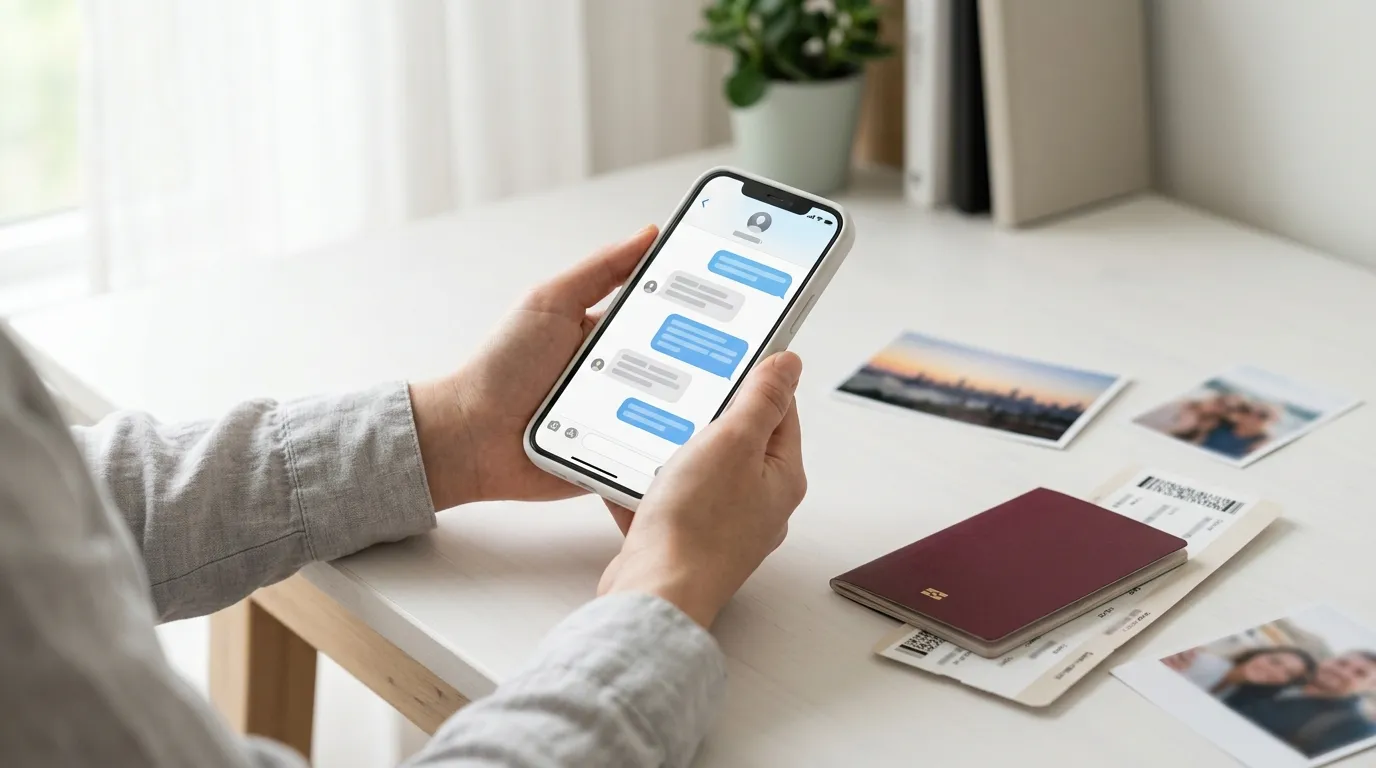
If you are filing for a fiance visa, understand this first: "proof of relationship" gets tested twice, in two very different ways. The I-129F petition that starts the K-1 process has a narrow, checklist-style set of requirements. The strength of your relationship gets examined again, more broadly, at the consular interview and in any request for evidence (RFE) along the way. The smart move is to build your evidence once, cleanly, and use it at both stages.
Interest in this path has grown: FY2024 I-129F approvals were reported at a 12-year high of roughly 56,000, with median processing down to about six months by early 2025 (figures from published Boundless and RapidVisa reports, so treat them as reported rather than official). More filings means more scrutiny, which makes getting the evidence right the whole game.
What the I-129F actually requires
Start with what the form genuinely asks for, because a lot of online advice inflates this. Per the I-129F instructions (edition 01/20/25), the petition has two core relationship requirements:
- Proof you met in person within the two years before filing. The instructions call for a written statement describing the meeting, backed by documentary evidence such as a copy of airline tickets, passport pages, or other evidence placing you both in the same place at the same time.
- Signed statements of intent to marry. Both you and your fiance must confirm, in signed statements, that you intend to marry after the beneficiary enters the United States.
That is the heart of it. Notice what is not on that list: the I-129F instructions do not ask for chat logs, text messages, or a record of your "ongoing relationship." If you are stressed about assembling hundreds of pages of messages just to file the petition, relax on that point. Chat history is not an I-129F requirement.
The meeting-in-person requirement trips up couples most, so be precise about it. What satisfies it is documentary proof that the two of you were physically in the same place within the two-year window, backed by a written statement in your own words describing the visit:
- Airline tickets or boarding passes show you traveled.
- Passport pages with entry and exit stamps for the country you visited show you arrived and left.
- Hotel receipts or an itinerary pin down the dates.
- Photos of the two of you together on that trip tie it all to you specifically.
Any one of these on its own is thin; together they are hard to argue with. If you genuinely cannot document a meeting within the window and are asking USCIS to waive the requirement, that is a separate showing with its own standard — involve an attorney rather than improvise.
The chat record matters enormously later — the part most people get backwards. The communication history the petition does not require is exactly the evidence that carries weight at the consular interview and in an RFE. Build it; just do not mistake it for a filing requirement.
Where relationship proof really gets tested
The K-1 process runs in stages. USCIS adjudicates the I-129F petition first. Once approved, the case moves through the National Visa Center to a U.S. consulate abroad, where your fiance sits for a consular interview. The officer's job there is broader than a checklist: they are assessing whether the relationship is genuine and whether you both really intend to marry.
This is where the nature of a K-1 works against you if you are not prepared. By definition, a fiance visa is for a couple who is not yet married and living apart. You do not have the joint lease, the shared bank account, or the co-titled car that a married couple submitting bona fide marriage evidence would have. Those joint documents cannot exist yet. So the gap has to be filled by the evidence that can exist across distance: proof you met, photos together over time, and a record of consistent communication.
Communication history is the natural gap-filler. Boundless rates phone and chat records as medium-strength evidence, below the joint finances and property that would anchor a married couple's case. But for an engaged couple living apart, chats are often the strongest continuous thread you have — a category that is merely "medium strength" for a married applicant can be your best available proof as a fiance, precisely because the higher-strength categories are off the table until you marry.
The same logic applies when responding to an RFE that questions the relationship. A clear, consistent communication record shows the relationship is real and ongoing rather than a snapshot arranged for the paperwork.
Two other kinds of proof pull weight at this stage and cost nothing to gather: photos of the two of you together, spread across the timeline rather than clustered in one trip, and a short written timeline of the relationship's milestones. None of this is decisive on its own, but together with the communication record it answers the officer's real question — not "did these two meet" but "is this a real relationship headed toward a real marriage."
Building the evidence packet
Think of your relationship evidence as a small, well-organized packet with four parts — the structure that serves you at every stage, from petition through interview:
- Meeting evidence. The tickets, passport stamps, itinerary records, and trip photos proving you met in person within the two years before filing, as described above. This is the piece the I-129F actually requires, so make it airtight.
- Photos over time. A handful of pictures of the two of you together, spread across the span of your relationship rather than all from one weekend. Date them where you can. Consistency over time is the signal an officer is looking for.
- Communication record (sampled). A representative sample of your messages showing steady, ongoing contact, not a raw dump of everything. More on doing this well below.
- Timeline. A short written narrative that ties the milestones together: how you met, when you first visited in person, the engagement, the planned wedding. It gives the officer a spine to hang the rest of the evidence on.
The governing principle is quality over quantity. A focused packet that tells a clear, honest story beats a mountain of paper an officer has to dig through. For each item you are tempted to include, ask what it proves that the pieces around it do not; if the answer is "nothing," leave it out. Ten photos from the same afternoon add far less than five photos from five different months, because what an officer is really evaluating is duration and continuity — whether this is a relationship with a history or one assembled recently for the paperwork.
Label everything plainly. A cover sheet or short index naming each section — meeting evidence, photos, communication record, timeline — lets the officer navigate the packet in the order you intend rather than guessing. You are not just handing over evidence; you are telling a story, and the ordering is part of the argument.
The communication record done right
The single most common mistake is dumping instead of sampling. Immigration attorneys consistently advise against submitting a complete message export, which for a couple in daily contact can easily run past 300 pages. Nobody reads 300 pages, and burying the signal under that much noise works against you. Submit a well-organized sample that demonstrates consistent communication over time.
Sample, don't dump
Pick representative stretches across the life of the relationship: a conversation from around when you met, one from the engagement, a few ordinary everyday exchanges from different months. The goal is to show the relationship is continuous and real, not to reproduce every word you have ever typed. A tight sample that spans time beats an exhaustive one that spans a single week.
Make it verifiable on its face
Whatever you include should be legible and self-explanatory. That means both names or phone numbers visible, so it is clear who is talking to whom, and a timestamp on each message, so the chronology is obvious. Keep it chronological, and produce a clean file per period or per conversation rather than a jumble of loose screenshots. An officer should be able to glance at any page and know who sent what, and when.
Here the format of the record matters as much as the content, and it is worth getting right once. TextPort pulls your chat straight out of iMessage — right on your iPhone, no computer needed — into a timestamped, text-searchable PDF where every message carries its sender, date, and time. It also handles WhatsApp, Instagram, and whatever app you and your fiance actually use — which matters for international couples, who rarely rely on plain SMS. One clean PDF per conversation or period is far easier to sample, label, and submit than a folder of screenshots. For the full step-by-step, see our guide on how to print WhatsApp chat history for USCIS.
One filing note: iPhone screenshots save as PNG or HEIC, and neither is on the accepted online-filing format list (PDF, JPG, JPEG). If you file through myUSCIS, convert your record to PDF or JPG first, keep each file under 12MB, and do not password-protect or encrypt it. If you file on paper, everything prints single-sided on standard 8.5 x 11 inch pages, and copies have to be legible.
When your chats are in another language
If any of your messages are in a language other than English and you submit them to USCIS, they need a certified English translation. Under 8 CFR 103.2(b)(3), any foreign-language document filed with USCIS must be accompanied by a full English translation, with the translator certifying that the translation is complete and accurate and that they are competent to translate. Form instructions add that the certification should carry the translator's signature, printed name, date, and contact information. The rule requires a certification, not notarization. Filing online, you upload the translation alongside the original file. For the specifics, see our USCIS translation requirements guide.
After approval: marriage and adjustment of status
Getting the K-1 is not the finish line. Once your fiance arrives on the visa, you marry within the K-1 window, and then file for adjustment of status to get a green card. At that point, the evidence picture shifts. You are now a married couple, so bona fide marriage evidence takes over: the joint documents that could not exist during the K-1 stage, like a shared lease, combined finances, and property held together.
Scrutiny of the marriage has also increased. Under a USCIS policy update (PA-2025-23, October 2025), the bona fides of a marriage are now reviewed both when the underlying petition is adjudicated and again when adjustment of status is adjudicated — described by USCIS as enhancing fraud screening — so plan on the marriage evidence being examined more than once. The habits you built for the K-1, a consistent communication record and a clear timeline, carry straight into that stage. For what the marriage-stage packet looks like, see our guide on bona fide marriage evidence.
The bottom line
K-1 proof of relationship is really two jobs wearing one name. The I-129F petition has a narrow requirement set: prove you met in person within the two years before filing, and sign statements of intent to marry after the beneficiary arrives. Chat logs are not on that list. But whether your relationship is genuine gets tested again at the consular interview and in any RFE — and that is where a couple living apart has to lean on photos over time, a consistent communication record, and a clear timeline, because the joint-life documents a married couple would show do not exist yet.
So build the evidence once and use it twice. Keep the meeting proof airtight, sample your communication rather than dumping it, make sure every message shows who sent it and when, and translate anything not in English with a proper certification. Do that, and you walk into the interview with a packet that tells a clear, honest story.
One thing to be clear about: TextPort is not a law firm or an immigration service. Nothing here is legal advice, and no evidence packet, from any tool, guarantees approval. USCIS rules and form editions change, so always confirm the current I-129F instructions and requirements on the official USCIS site before you file, and consult an immigration attorney for advice about your case. This article is current as of mid-2026 and cites the I-129F instructions edition 01/20/25.
Frequently asked questions
-
Two different things, at two different stages. For the I-129F petition itself, the required proof is narrow: evidence that you met in person within the two years before filing, plus signed statements that you both intend to marry after the beneficiary arrives. At the consular interview, the officer looks more broadly at whether the relationship is genuine, and that is where photos together over time, a consistent communication record, and a clear timeline matter. Build both. The petition proof gets you approved; the broader relationship proof gets you through the interview.
-
Per the I-129F instructions (edition 01/20/25), the petition requires evidence that you and your fiance met in person within the two years before filing, shown by a written statement plus supporting proof like airline tickets, passport pages, or other evidence, and signed statements from both of you that you intend to marry after the beneficiary enters the United States. The instructions do not ask for chat logs, text messages, or ongoing-relationship evidence. Those matter in practice later, at the consular interview and in any request for evidence, but they are not part of the I-129F checklist.
-
The I-129F instructions (edition 01/20/25) call for a written statement describing the meeting plus documentary support. The classic proof is a copy of airline tickets or boarding passes, passport pages with entry and exit stamps for the country you visited, and hotel receipts or an itinerary that place you both there at the same time. Photos of the two of you together on that trip help tie it together. If you cannot document a meeting within the two-year window and are requesting a waiver, that is a separate showing with its own standard, so talk to an attorney.
-
No. Chat logs are not on the I-129F requirement list (instructions edition 01/20/25). The petition asks for proof you met in person and signed intent to marry, not a record of your messages. That said, a well-organized sample of your communication history is worth preparing now, because it becomes useful at the consular interview and in any request for evidence — which is where a couple living apart, the defining K-1 situation, gets asked to show the relationship is real. Build the record once so it is ready when it counts.
-
Enough to tell a clear, honest story, not a phone book. For the I-129F, meet the meeting-in-person and intent-to-marry requirements cleanly. For the interview, a focused packet beats a giant one: proof you met, a handful of photos spread across your relationship, a sampled communication record that shows steady contact over time, and a short timeline. Immigration attorneys consistently advise sampling over dumping, because a complete phone export can run past 300 pages and buries the point. Quality and consistency persuade an officer far more than raw volume.
-
A clean structure works best: (1) proof you met in person within two years — tickets, passport stamps, itinerary, and trip photos; (2) photos of the two of you together across the span of the relationship, dated where possible; (3) a sampled communication record showing consistent contact over time, with both names or numbers and timestamps visible; and (4) a short written timeline tying the milestones together. Label each section, keep it chronological, and favor a few strong pieces per category over a pile. This same structure carries into the interview and any request for evidence.
-
Yes, if you submit them to USCIS. Under 8 CFR 103.2(b)(3), any foreign-language document filed with USCIS must include a full English translation, and the translator must certify that the translation is complete and accurate and that they are competent to translate. Form instructions add that the certification should include the translator's signature, printed name, date, and contact information. The rule requires a certification, not notarization. If you are filing online, upload the translation alongside the original. Our translation requirements guide covers the details.
-
After USCIS approves the I-129F, the case moves to the National Visa Center and then to a U.S. consulate abroad, where the foreign fiance attends an interview. The consular officer confirms eligibility and probes whether the relationship is genuine and whether you truly intend to marry. This is where your broader relationship proof — photos over time, a consistent communication record, and a clear timeline — does its real work, because a couple living apart cannot rely on the joint bills or shared lease a married couple would have. Bring an organized, honest packet.

Start exporting your messages
Available for iPhone, Mac, and Windows. No computer required.